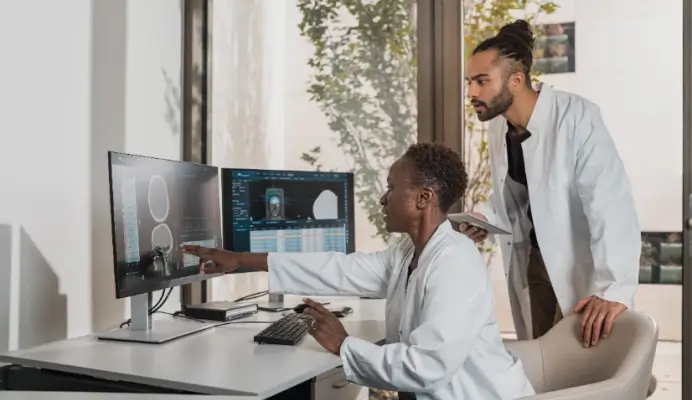
Remote reading has become essential to enterprise imaging operations because healthcare organizations need scalable, flexible solutions to address critical workforce shortages, fluctuating imaging volumes, and 24/7 subspecialty coverage demands—challenges that traditional on-site staffing models can no longer solve effectively.
Key Takeaways
- Remote reading has evolved from supplemental coverage to essential infrastructure for modern healthcare operations
- Remote radiologists face three critical challenges: workflow friction, technical barriers, and burnout risks that impact patient care
- Cloud-native platforms like Intelerad solve these problems through automation, unified access, and intelligent clinical tools
- Healthcare organizations implementing robust remote reading strategies report 30-40% improvements in turnaround times and increased radiologist satisfaction
- The global teleradiology market is projected to reach $60.3 billion by 2030, reflecting its growing strategic importance
What Are the Main Problems Remote Radiologists Face?
Remote radiologists face three major operational challenges that directly impact healthcare delivery:
Workflow Friction and Inefficiency
Remote radiologists struggle with slow VPN connections, fragmented hospital systems, and inconsistent processes that waste valuable time and create frustration. These technical annoyances compound over thousands of reads, substantially reducing productivity and distracting from clinical work.
Technical Barriers to Productivity
Limited bandwidth, slow image delivery, and incompatible IT systems create inconsistent productivity across locations. According to the American College of Radiology’s imaging informatics resources, these infrastructure challenges directly impact diagnostic accuracy and turnaround times when radiologists can’t access images efficiently. The Radiological Society of North America emphasizes that proper IT infrastructure is essential for maintaining diagnostic quality in remote reading environments.
Burnout and Retention Risks
Poor remote reading experiences contribute significantly to radiologist burnout and high turnover. Administrative burdens without proper tooling make sustainable workloads nearly impossible to maintain. This exacerbates the existing radiologist shortage, with RSNA reportingthat demand for radiologists continues to outpace supply, with workforce projections showing significant shortages through 2030.
Why Is Remote Reading Important for Healthcare Organizations?
Healthcare organizations can no longer treat remote reading as an isolated function. Enterprise imaging strategies from HIMSS-SIIM must integrate remote workflows as seamlessly as on-site operations. The stakes are too high—delayed diagnoses, overwhelmed radiologists, and operational bottlenecks directly affect patient care and financial performance.
Modern healthcare demands scalability and flexibility. Imaging volumes fluctuate unpredictably, subspecialty expertise is geographically concentrated, and 24/7 coverage expectations are standard. Healthcare systems implementing robust teleradiology infrastructure report significant improvements in report turnaround times and increased radiologist satisfaction.
How Does Intelerad Solve Remote Reading Challenges?
Intelerad’s platform addresses these pain points through three evidence-based solutions:
Friction-Free Remote Reading Through Automation
Intelerad automates and unifies radiology workflows so radiologists focus on clinical work rather than navigating complex systems. The InteleOrchestrator continuously evaluates and prioritizes cases in real-time, intelligently routing studies to the right radiologist based on subspecialty, credentials, workload, location, and availability. This eliminates the need for multiple logins and manual image retrieval that waste valuable diagnostic time.
Seamless Cloud-Enabled Access From Anywhere
The platform provides unified, cloud-enabled access that bypasses slow VPNs and disparate hospital systems through a single cloud-native platform. By optimizing image delivery and system performance, productivity isn’t limited by bandwidth or infrastructure constraints. Integration with existing hospital IT systems—compliant with DICOM standards and HL7 interoperability requirements—reduces the need for local installations and manual upgrades while maintaining security and compliance with HIPAA regulations.
Radiologist Empowerment with Clinical Tools
Intelerad empowers radiologists with an automated, context-aware worklist that surfaces cases at the right time based on clinical priority and subspecialty match. Integrated reporting templates with auto-populated patient data reduce documentation time by up to 40%. Solutions like InteleOrchestrator™ and IntelePACS® enable efficient remote reading while reducing administrative burden, improving retention, and maintaining sustainable workloads that prevent burnout.
What Are the Benefits of Enterprise Remote Reading?
Healthcare organizations implementing comprehensive remote reading strategies report:
- Improved operational efficiency: Reduced report turnaround times and better resource utilization
- Enhanced radiologist satisfaction: Lower burnout rates and improved retention
- Better patient outcomes: Faster access to subspecialty expertise regardless of location
- Increased flexibility: Ability to scale capacity up or down based on volume fluctuations
- Cost optimization: Reduced overhead compared to traditional staffing models
What Is the Future of Remote Reading?
Remote reading has matured from a stopgap solution to strategic infrastructure. According to market research from Grand View Research, the global teleradiology market is projected to reach $60.3 billion by 2030, growing at a CAGR of 25.7%, reflecting the sector’s growing importance in healthcare delivery.
Healthcare organizations that treat remote reading as essential infrastructure—investing in proper platforms, workflows, and tools—will navigate workforce challenges more effectively, deliver better patient outcomes, and build more resilient imaging operations. Those that don’trisk falling behind competitors who recognize that in modern healthcare, remote reading capabilities aren’t supplemental—they’re essential to maintaining competitive advantage and delivering quality patient care.
Remote Reading as Strategic Imperative
The shift from optional to essential reflects broader changes in healthcare delivery. As workforce pressures intensify and patient expectations for rapid, accurate diagnoses grow, the organizations that thrive will be those that recognize remote reading as core infrastructure requiring the same investment and attention as any other critical system.
Ready to transform your remote reading operations?
Discover how Intelerad’s enterprise imaging platform can eliminate workflow friction, improve radiologist satisfaction, and scale your imaging operations efficiently.
Contact us or book a demo to learn how leading healthcare organizations are building resilient, future-ready imaging departments with cloud-native solutions designed for the demands of modern remote reading.