Intelerad is now a GE HealthCare company. Learn More.
Learn more about our products.
Our technology spans the patient journey to streamline processes and connect physicians, no matter where they are.
Intelerad will showcase acquisitions, innovative imaging solutions, and cloud technology at RSNA21, offering in-person and virtual sessions from Nov. 28–Dec. 2 at McCormick Place, Chicago.
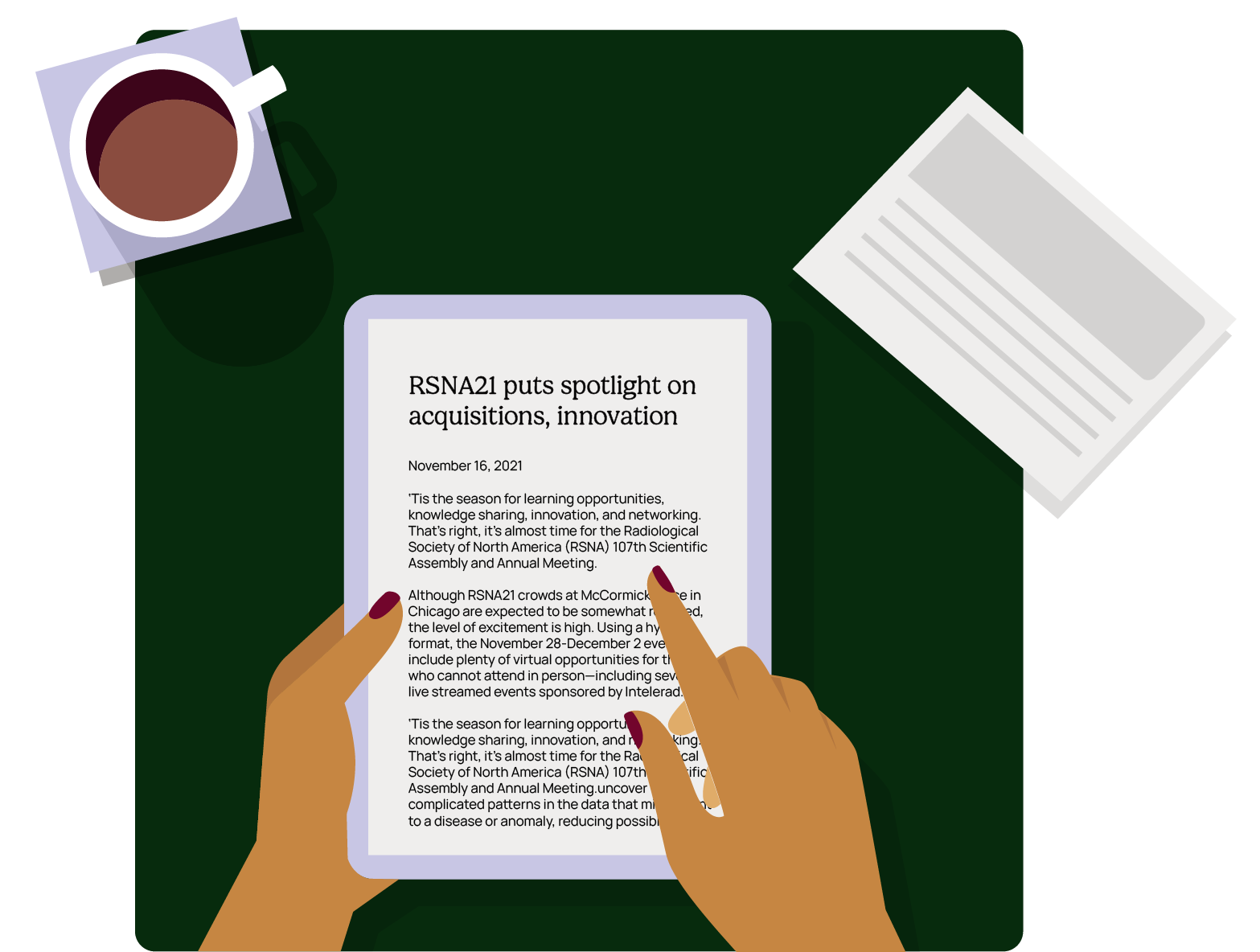
RSNA21 is the 107th Scientific Assembly and Annual Meeting of the Radiological Society of North America. The event runs Nov. 28–Dec. 2 in Chicago and features a hybrid format with in-person exhibits and virtual, live-streamed sessions for remote attendees, including several live-streamed events sponsored by Intelerad.
Visit booth #6115 on Level 3 of the North Hall at McCormick Place. Attendees can explore product demos, attend theater sessions, and learn about Intelerad’s latest acquisitions, cardiovascular solutions and enterprise imaging innovations.
Map and details: www.intelerad.com/rsna-21/booth/
Reserve your spot:
RSNA’s Virtual Product Theater will feature Intelerad’s webinar, “Medical Imaging Management Platform Empowers Enterprise-Wide Collaboration” on Nov. 29, presented by subject matter expert Tara Martyres.
Whether in person or online, RSNA21 offers insights into digital transformation in healthcare, cloud-based imaging, and AI-driven workflows. Intelerad’s sessions provide actionable strategies for improving interoperability and patient care.
Visit www.intelerad.com/rsna-22 or rsna2021.rsna.org for full event details.
Cloud-based enterprise imaging shortens the path from scan to diagnosis by centralizing data, automating workflows, and enabling AI-driven prioritization. As imaging volumes grow, legacy PACS environments often create delays due to limited scalability and fragmented workflows. A cloud-based approach removes these bottlenecks, supporting faster clinical decisions, improved operational efficiency, and secure access across the enterprise.
Selecting the right imaging partner goes beyond replacing legacy PACS technology. Healthcare organizations must evaluate how a partner supports reliability, scalability workflow efficiency, innovation readiness, and measurable operational impact.
Radiologists struggle to share work across systems because each PACS manages workflow independently. Centralized workflow orchestration helps balance workloads, streamline collaboration, and scale reading operations across organizations.