Intelerad is now a GE HealthCare company. Learn More.
Learn more about our products.
Our technology spans the patient journey to streamline processes and connect physicians, no matter where they are.
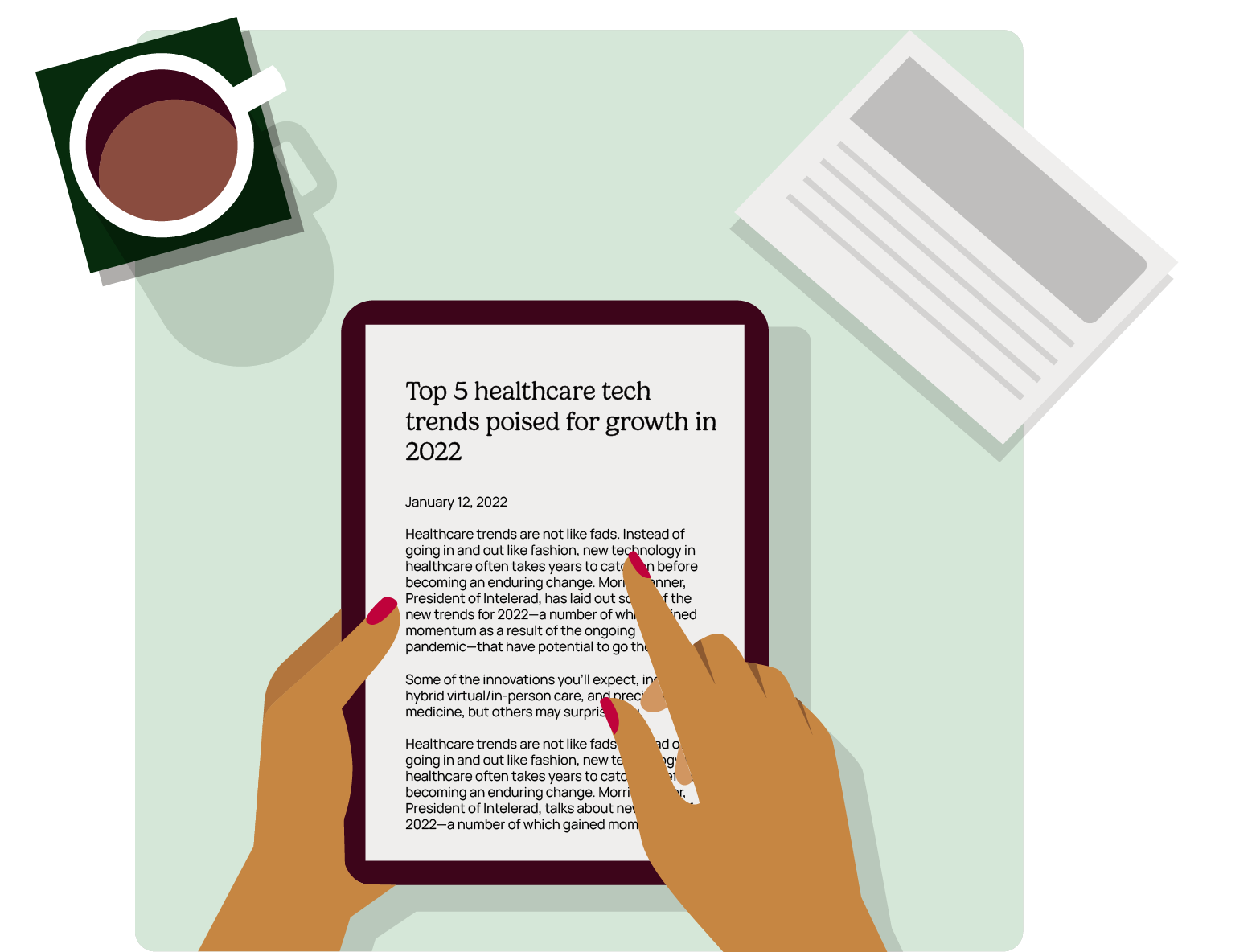
The top five healthcare technology trends for 2022 include hybrid care models, digitization of specialties, increased AI adoption, cloud migration, and advanced precision medicine—innovations that are reshaping patient care and healthcare IT.
Healthcare technology evolves slowly but creates a lasting impact. According to Morris Panner, President of Intelerad, these five trends—accelerated by the pandemic—are poised for long-term growth and transformation in healthcare delivery.
Virtual care and telehealth are here to stay, but they won’t replace in-person visits. Instead, expect hybrid models that combine virtual and physical care, giving patients flexibility while maintaining quality and continuity.
Healthcare specialties like radiology and pathology are embracing digital platforms. This shift improves accessibility, speeds up workflows, and supports remote collaboration—critical for modern healthcare systems.
AI is moving beyond backend support to more complex tasks. As algorithms become more sophisticated, they will assist clinicians in diagnostics, predictive analytics, and workflow automation, improving efficiency and outcomes.
Cloud-based platforms enable secure, interoperable data sharing and make patient portals possible. They allow healthcare organizations to transmit critical information quickly and safely from any location, supporting scalability and compliance.
Precision medicine is transforming treatment with immunotherapy for cancer and gene-specific drugs for conditions like cystic fibrosis. These personalized approaches improve outcomes and represent the future of targeted care.
Originally published in Entrepreneur on January 5, 2022.
Selecting the right imaging partner goes beyond replacing legacy PACS technology. Healthcare organizations must evaluate how a partner supports reliability, scalability workflow efficiency, innovation readiness, and measurable operational impact.
Radiologists struggle to share work across systems because each PACS manages workflow independently. Centralized workflow orchestration helps balance workloads, streamline collaboration, and scale reading operations across organizations.
EHR strategies fall short when imaging lives outside clinical workflows. True imaging integration embeds images directly into the EHR - eliminating context-switching, reducing duplicate exams, and enabling faster, more confident decisions across the enterprise.