Intelerad is now a GE HealthCare company. Learn more about this partnership.
Our technology spans the patient journey to streamline processes and connect physicians, no matter where they are.
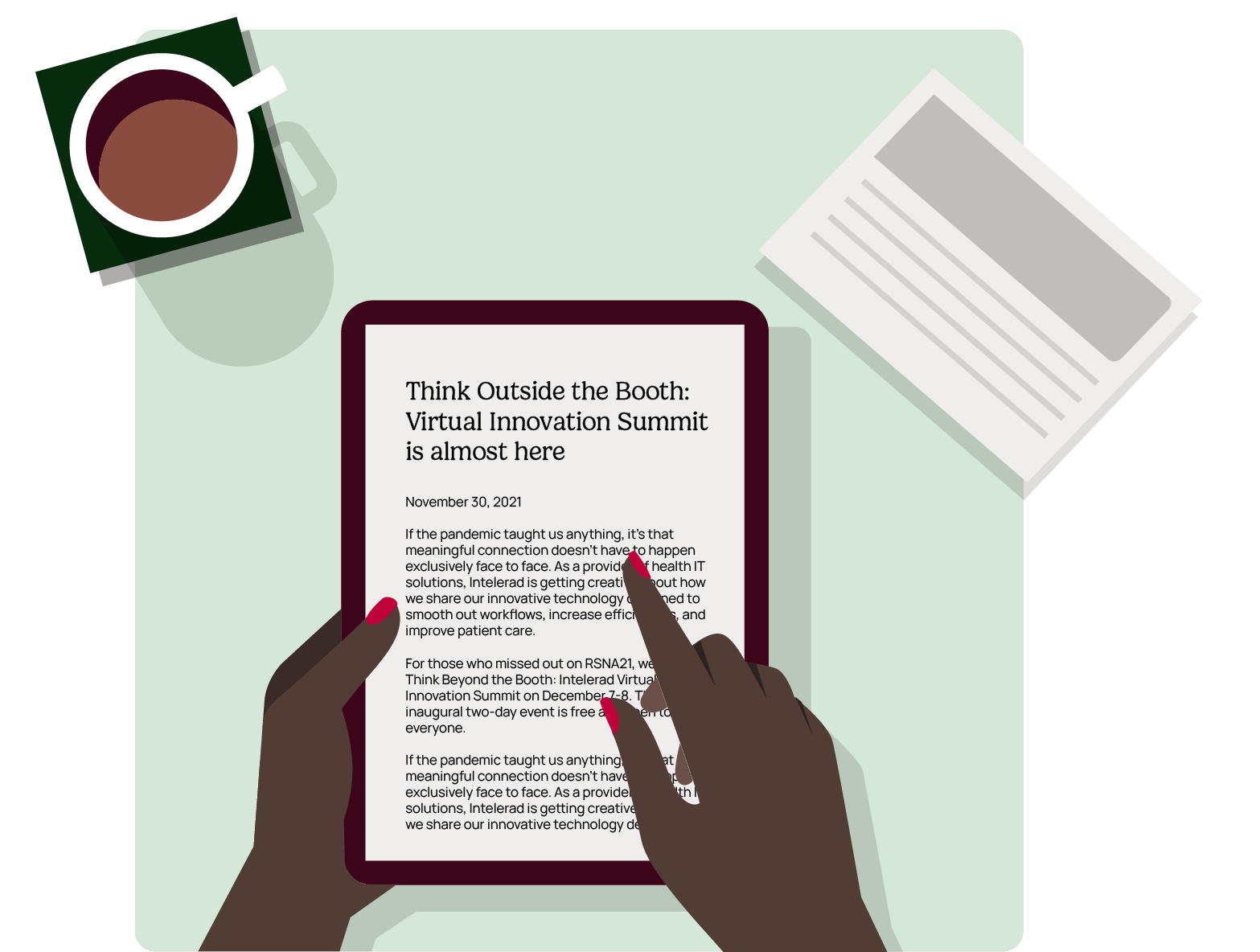
Intelerad’s Virtual Innovation Summit on Dec. 7–8 offers free, global access to thought leadership, cloud technology insights, and enterprise imaging solutions—all available live and on-demand.
The Virtual Innovation Summit is a two-day online event designed to showcase transformative healthcare IT solutions. It focuses on cloud technology and medical imaging management, providing attendees with strategies to improve workflows, efficiency, and patient care.
The event takes place Dec. 7–8 and is free and open to everyone. Times are scheduled to accommodate international audiences, and on-demand access will be available for registrants who cannot attend live.
The agenda includes:
If you missed RSNA21 or want deeper insights into cloud-based imaging and enterprise solutions, this summit offers expert perspectives and practical strategies for digital transformation in healthcare.
Sign up at www.intelerad.com/virtual-summit/ to secure your spot. Registration ensures access to live sessions and on-demand content after the event.
Enterprise image exchange enables healthcare organizations to securely share and access medical images across systems, facilities, and networks. Learn how enterprise image exchange platforms support interoperability, secure image sharing, and scalable imaging workflows across healthcare organizations.
Image sharing in radiology still falls short because most systems are designed to move files, not deliver images within clinical workflows at the moment they’re needed. This blog explores why image sharing feels broken, what’s changing in radiology image access, and how time-to-image is becoming a more meaningful way to evaluate performance.
Radiology workflows often break down due to disconnected systems, manual processes, and inconsistent data across case selection, prior access, reporting, and communication. These challenges can interrupt reading flow, delay diagnosis, and create inefficiencies across the entire imaging process.