Intelerad is now a GE HealthCare company. Learn more about this partnership.
Our technology spans the patient journey to streamline processes and connect physicians, no matter where they are.
Intelerad will showcase acquisitions, innovative imaging solutions, and cloud technology at RSNA21, offering in-person and virtual sessions from Nov. 28–Dec. 2 at McCormick Place, Chicago.
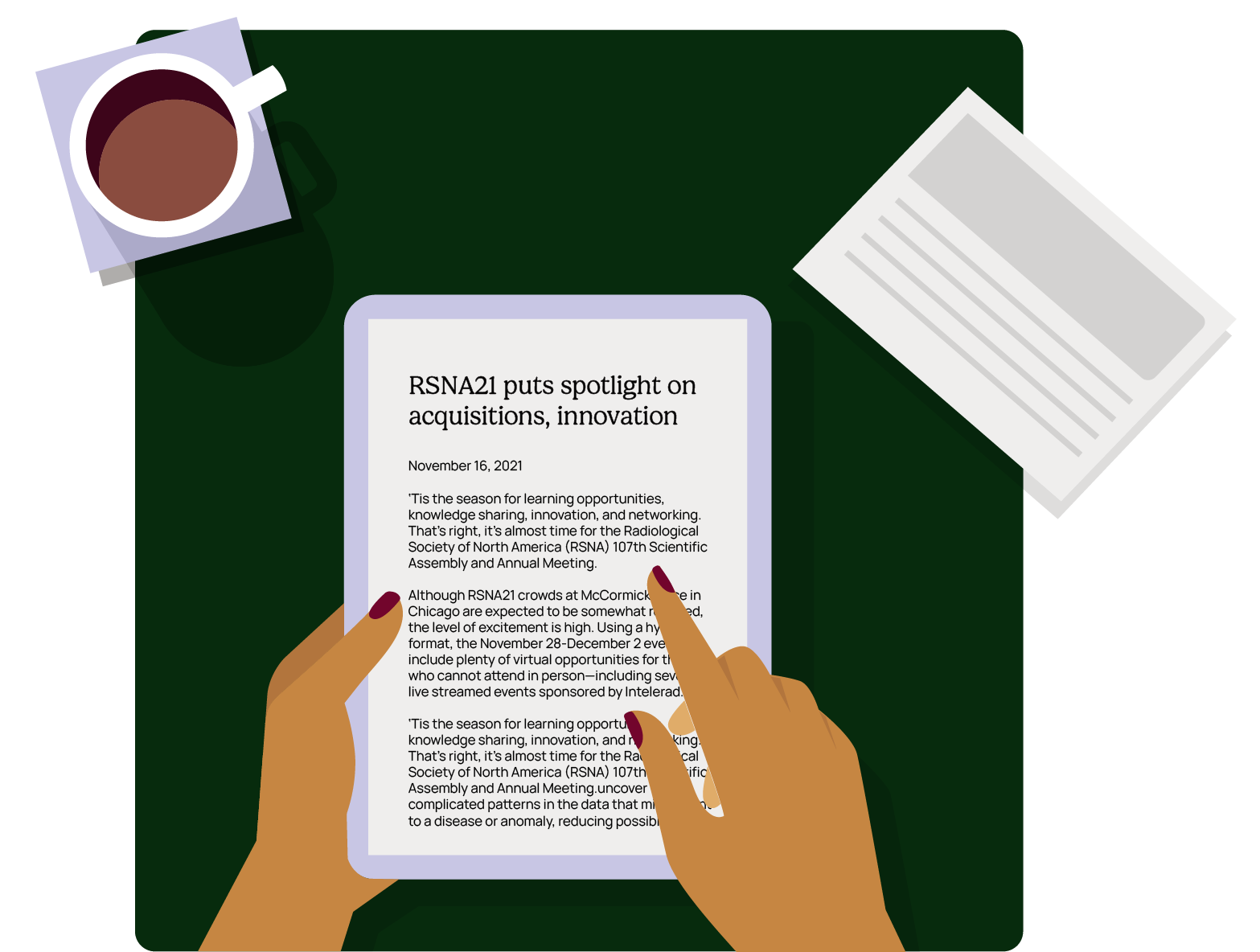
RSNA21 is the 107th Scientific Assembly and Annual Meeting of the Radiological Society of North America. The event runs Nov. 28–Dec. 2 in Chicago and features a hybrid format with in-person exhibits and virtual, live-streamed sessions for remote attendees, including several live-streamed events sponsored by Intelerad.
Visit booth #6115 on Level 3 of the North Hall at McCormick Place. Attendees can explore product demos, attend theater sessions, and learn about Intelerad’s latest acquisitions, cardiovascular solutions and enterprise imaging innovations.
Map and details: www.intelerad.com/rsna-21/booth/
Reserve your spot:
RSNA’s Virtual Product Theater will feature Intelerad’s webinar, “Medical Imaging Management Platform Empowers Enterprise-Wide Collaboration” on Nov. 29, presented by subject matter expert Tara Martyres.
Whether in person or online, RSNA21 offers insights into digital transformation in healthcare, cloud-based imaging, and AI-driven workflows. Intelerad’s sessions provide actionable strategies for improving interoperability and patient care.
Visit www.intelerad.com/rsna-22 or rsna2021.rsna.org for full event details.
Image sharing in radiology still falls short because most systems are designed to move files, not deliver images within clinical workflows at the moment they’re needed. This blog explores why image sharing feels broken, what’s changing in radiology image access, and how time-to-image is becoming a more meaningful way to evaluate performance.
Radiology workflows often break down due to disconnected systems, manual processes, and inconsistent data across case selection, prior access, reporting, and communication. These challenges can interrupt reading flow, delay diagnosis, and create inefficiencies across the entire imaging process.
Radiology reporting systems are being retired as workflows become more complex and distributed. Legacy platforms can’t keep pace, creating friction instead of efficiency. Modern cloud-based solutions streamline workflows, reduce turnaround times, and better support today’s radiologists.